Rally 2025 Day 3 / Crater Lake National Park
Geology Rocks! by Ian MadinIan Madin worked as a geologist with the Oregon Department of Geology and Mineral Industries for 32 years and has ridden with Cycle Oregon for over a decade now. Here, he gives us a look at the cool and sometimes hidden geology of the regions through which we ride. Look for him out on the route and back in camp at Rally ’25.
The Main Attraction
Crater Lake is a fantastic place, unique and breathtakingly beautiful, and the ride around it is a true classic. Although the scenery is spectacular from any vantage, the geology can be harder to see because of the steepness of slopes and the distance to the opposite rim. This guide will touch on a few of the more easily visible features.
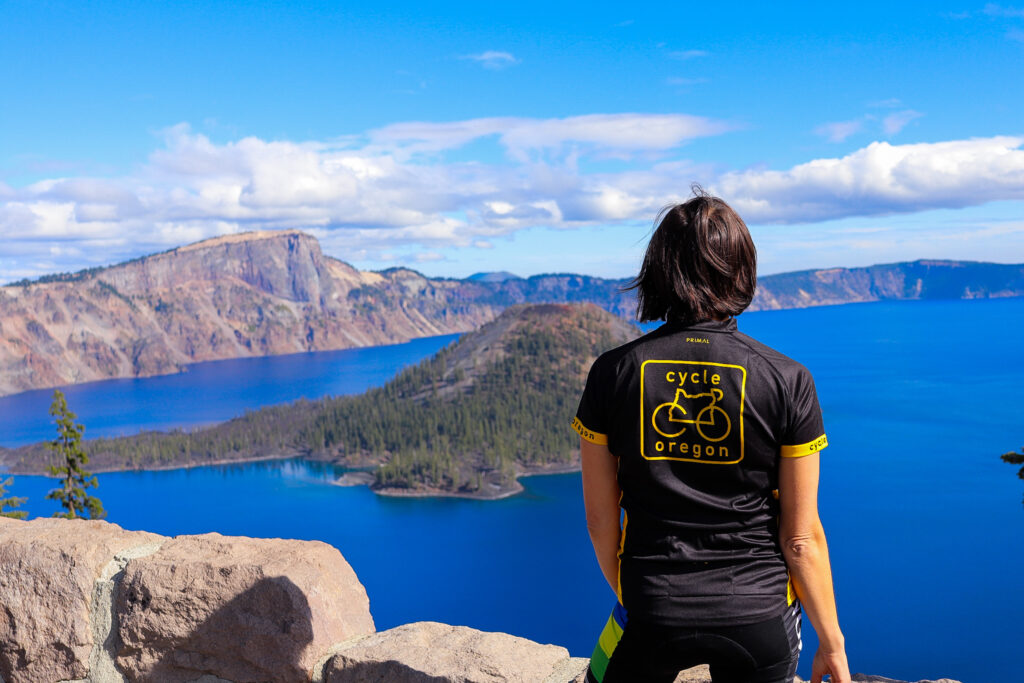
The approach to the rim from the park entrance starts in a sparse forest of lodgepole pine but eventually breaks out onto the Pumice Desert, a broad slope covered with thin grass and a few hardy trees. The pumice from the big eruption is thick here, and is very porous, so rainfall and snowmelt quickly seep in, leaving the upper layers too dry to support much plant life. At the north rim viewpoint you get your first glimpse of the hollowed-out volcano and the unbelievably blue lake that fills it.
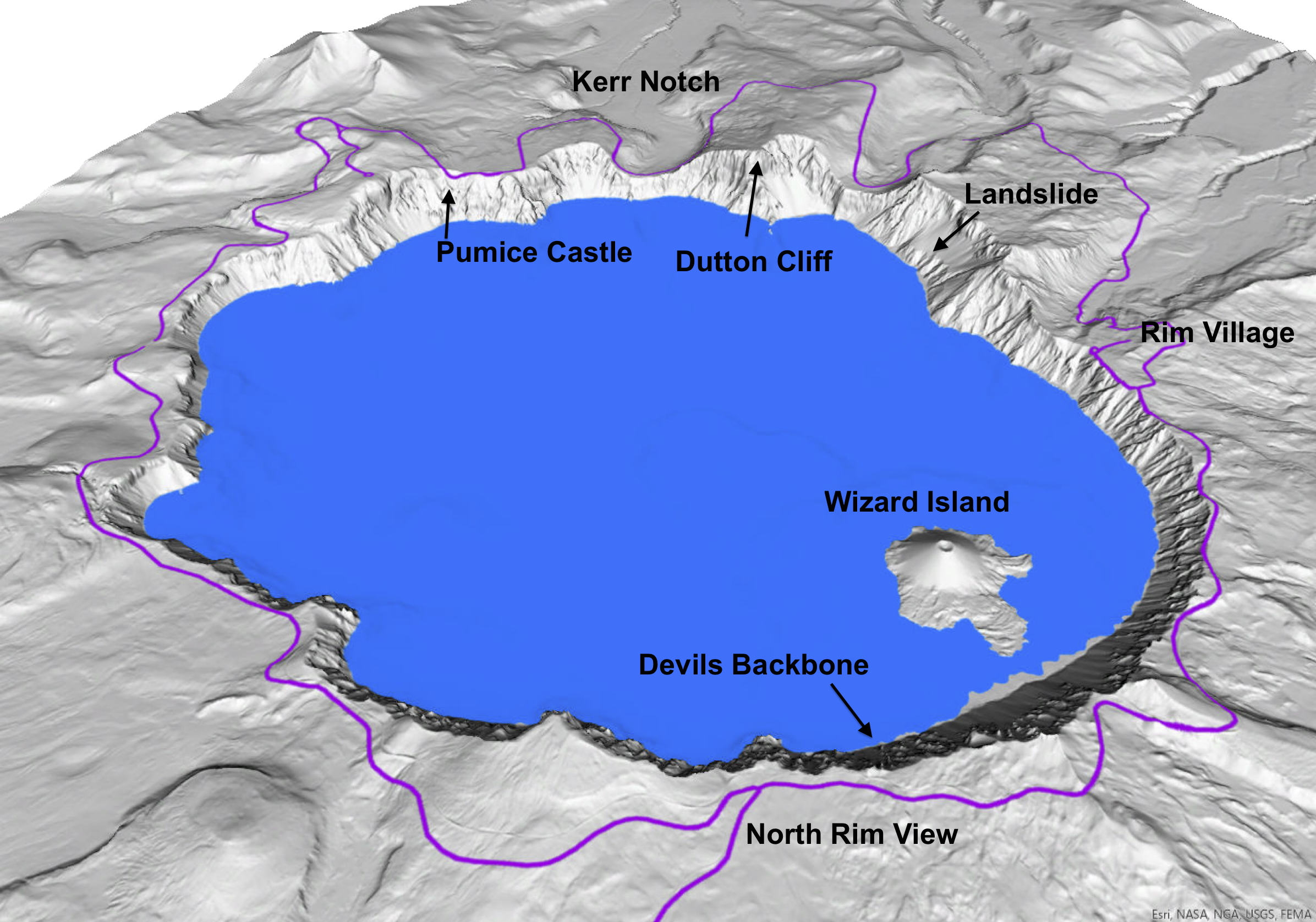
sections. Rally Day 3 route in purple.
Mt. Mazama was a stratovolcano, which means it was built up from hundreds of layers of lava, ash and tuff that piled up over hundreds of thousands of years around the central vent. This layering is easiest to see from lake level. The sequence of layers varies as you circle the crater, and few covered the entire mountain. At Dutton Cliff you can see a series of thin dark basalt lava flows capped by thick grey andesite lava flows separated by bands of red rubble. (Image below)
In addition to the lava flows that built up the mountain, there were earlier eruptions of ash and pumice that covered much more of the mountain. A distinctive band of orange tuff is visible around the southeast side of the crater, high on the rim, and is responsible for the feature called Pumice Castle. This tuff is visible at the top of the Cleetwood Cove trail if you decide to make the hike to the lake.
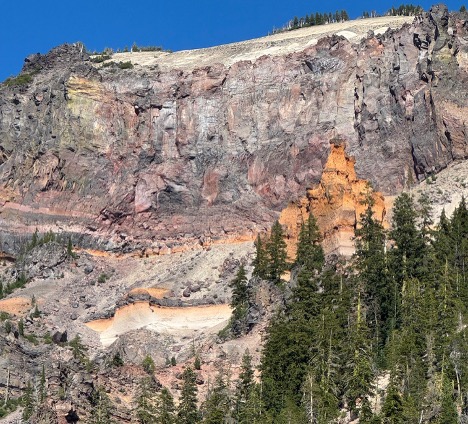
Pumice Castle is the name for this eroded remnant of tuff. The black and white layers are part of the same tuff body, the orange color is the result of iron deposited in parts of the layer by mineral rich groundwater. Above the tuff there is a thick layer of andesite lava and the top of the rim has a layer of pumice from the eruption that formed the crater. Pumice Castle is visible from the Cloudcap Viewpoint. (Mile 25.7 on the Main Route which is also a Rest Stop)
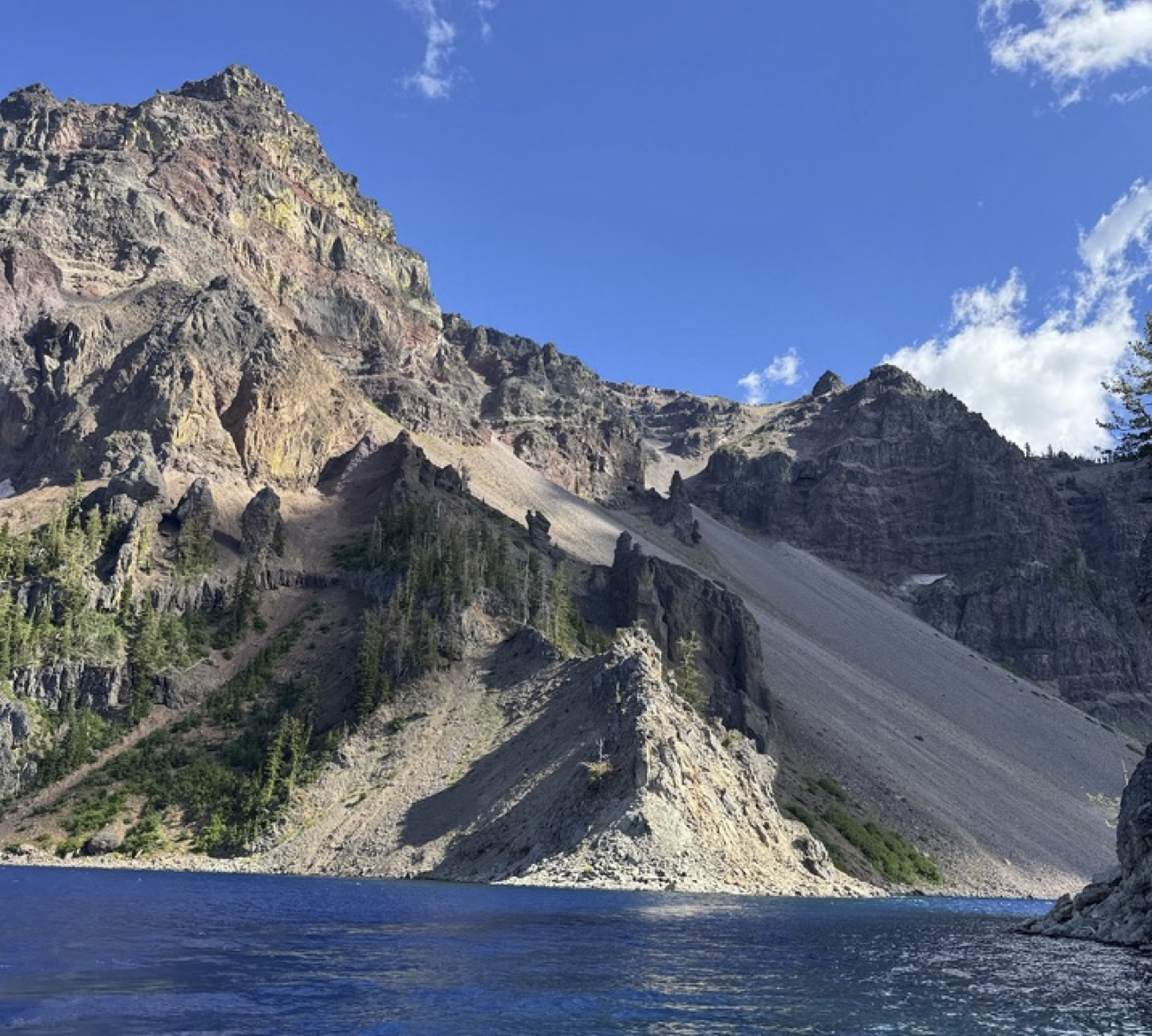
As the mountain grew layer by layer, the molten rock feeding later eruptions had to force its way through the previous layers to reach the surface. Lava remained in these fissures after the eruption, cooling to form a dike, a thin sheet of lava that cuts vertically across the older horizontal layers. The Devils Backbone on the southwest side of the lake is one of the most impressive dikes visible in the rim.
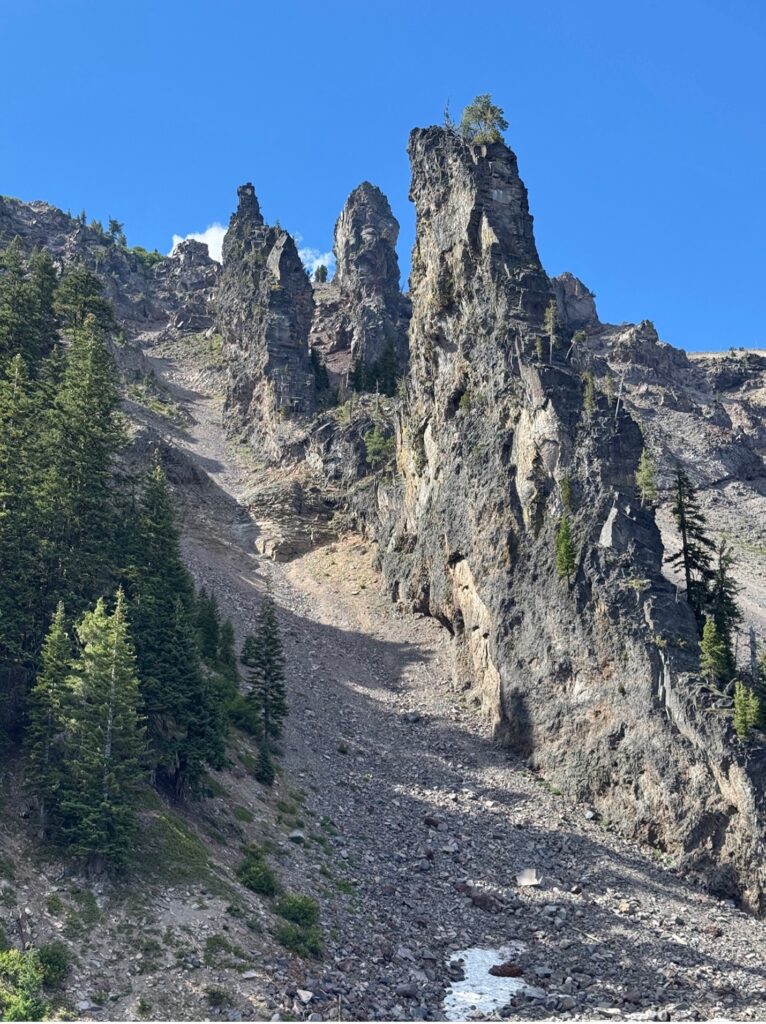
way to the surface through earlier layers of lava.
After the great eruption, two small volcanos grew from the floor of the crater. Merriam Cone sits 600 feet below the surface, a perfect cone that rises 1300 feet above the flat floor of the crater.
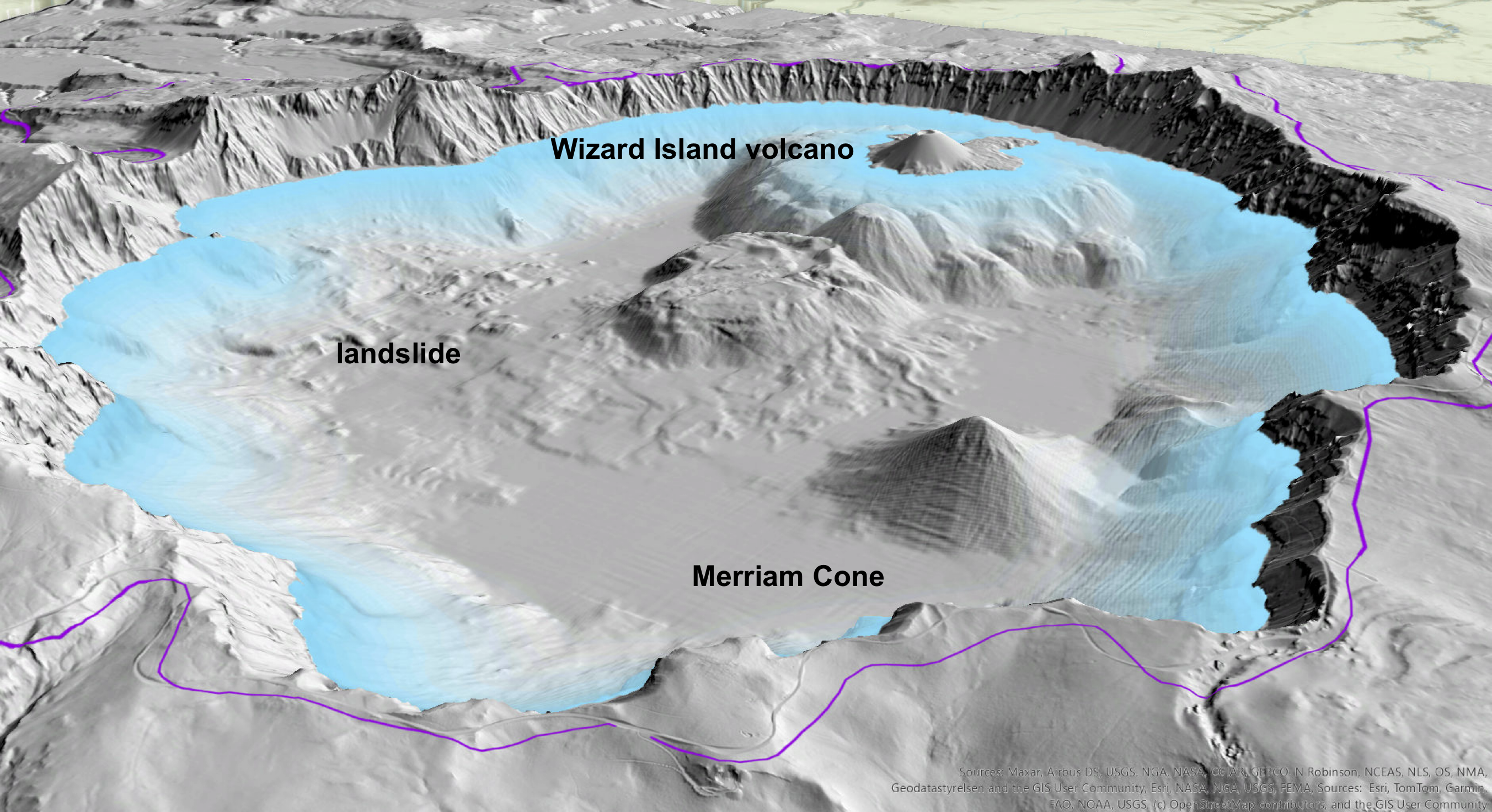
Merriam Cone and the Wizard Island volcano grew after the collapse of the mountain. Debris from a giant landslide can be seen on the lake floor at the left. The small perfect cinder cone of Wizard Island sits on top of a massive underwater pile of lava, and is surrounded by a chaotic flow of andesite lava. Cinder cones form when the molten rock reaching the surface is charged with dissolved gas, causing it to foam and fountain. The spray of lava thrown into the air freezes into cinders and falls back to earth to build a cone of loose material around the vent. Eventually the gas pressure is relieved, and the liquid lava can flow away from the cone.
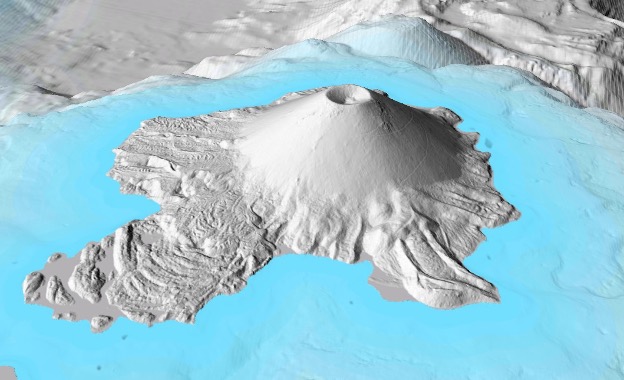
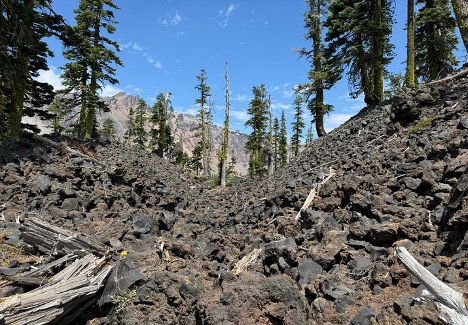
Wizard Island is the tip of a much larger underwater volcano, and consists of a cinder cone surrounded by A’a lava flows. The thick slowly moving flows have wrinkled surfaces, and two flows on the right-hand side of the Island have natural levees. In this case the lava was fairly thick, and formed an A’a flow. A’a lava flows slowly and develops a thick frozen crust. As it continues to move, the crust breaks up into a jumble of jagged lava boulders, leaving the flow covered with a chaotic mass of loose rock. At Wizard Island, one part of the flow had the liquid core drain away, causing the inside of the flow to subside, leaving sharp lava levees on either side.
On the Southeast side of the lake, just West of Kerr Notch, there is a big scoop out of the rim, and beneath the water a massive fan of rock rubble. The rock of the canyon rim here was weakened by hot acidic spring water until it eventually collapsed, leaving behind the gap in the rim and spreading debris 2 miles out into the lake. Kerr Notch is the remains of one of the many valleys gouged out of the top of Mt. Mazama by glaciers. When the mountain collapsed, the upper reaches of the valley went with it. Now you can see the characteristic “u” shaped profile of a glacier valley where Kerr notch meets the rim.
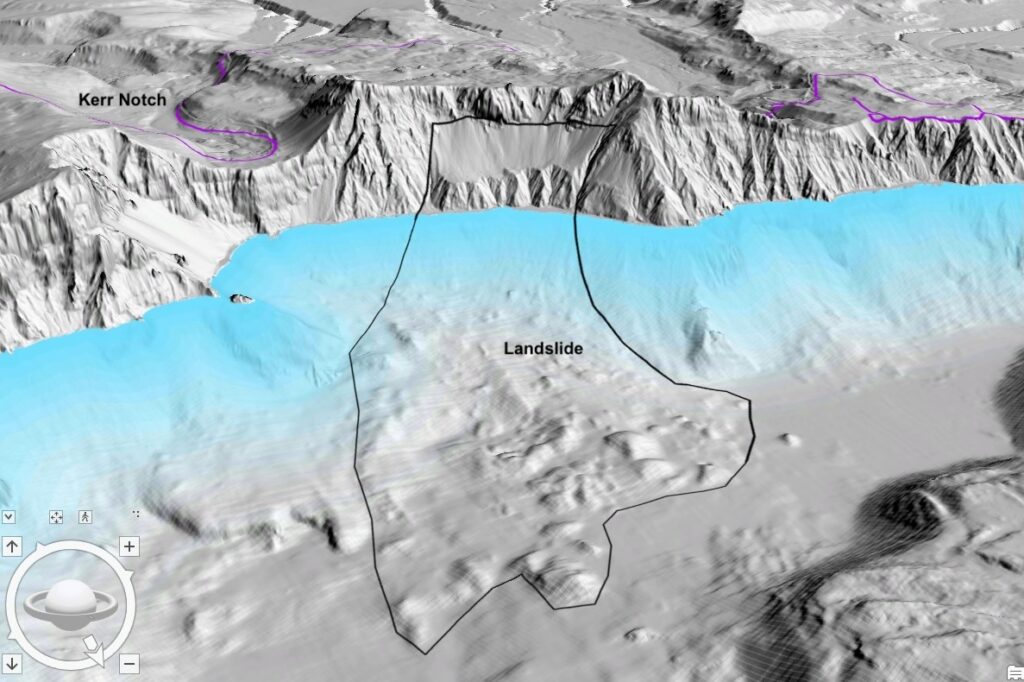
The large gap in the upper crater wall is the source of a huge landslide that spread debris across the lake floor. Kerr notch is the remnant of a glacial valley that extended far up the mountain before the great eruption.
Crater Lake & Cycle Oregon
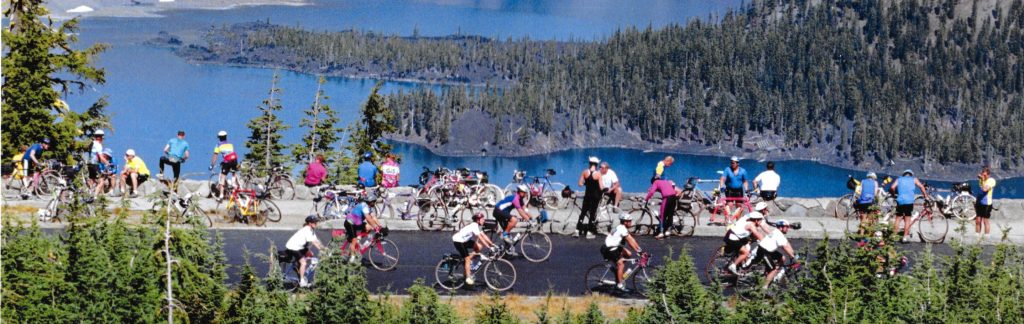
Cycle Oregon first visited Crater Lake in 1992. Here’s what folks were talking about:
United States President George H. W. Bush and Russian President Boris Yeltsin jointly announced that the Cold War had ended.
Crystal Pepsi debuted.
60 Minutes was the most popular TV show, Aladdin was the most popular film, and All Around the Town was the best-selling book. The Silence of the Lambs won the top five Academy Awards, Murphy Brown won an Emmy for Outstanding Comedy Series, and Unforgettable won a Grammy for Song of the Year.
The Washington Redskins won Super Bowl XXVI, and the Toronto Blue Jays won the 89th World Series. Likewise, the Pittsburgh Penguins clinched the 29th Stanley Cup, and Al Unser Jr. won the 76th Indianapolis 500. The 1992 Tour de France was won by Miguel Induráin, marking his second consecutive victory in the race.
Time Magazine’s “Person of the Year” was Bill Clinton.
Popular Halloween costumes were Batman, Catwoman, The Lost Boys, Freddy Kruger, Axel Foley from Beverly Hills Cop.
Fashion trends in 1992 were crop tops, platform shoes, animal prints, faux fur, velvet, windbreakers, and denim.
The first smartphone was developed at IBM.
About one million computers worldwide had Internet access, and the term “surfing the Internet” was coined. By the end of the year there were 10 websites available online.
Wildstones
Off the bike, Ian applies his interest in Oregon geology through art and sculpture. Check out his work at Wildstones.art and follow him on Instagram to see what he’s up to in the studio, out in the field or in the saddle. Rock on, Ian!
For a downloadable PDF of Ian’s full report, click here.