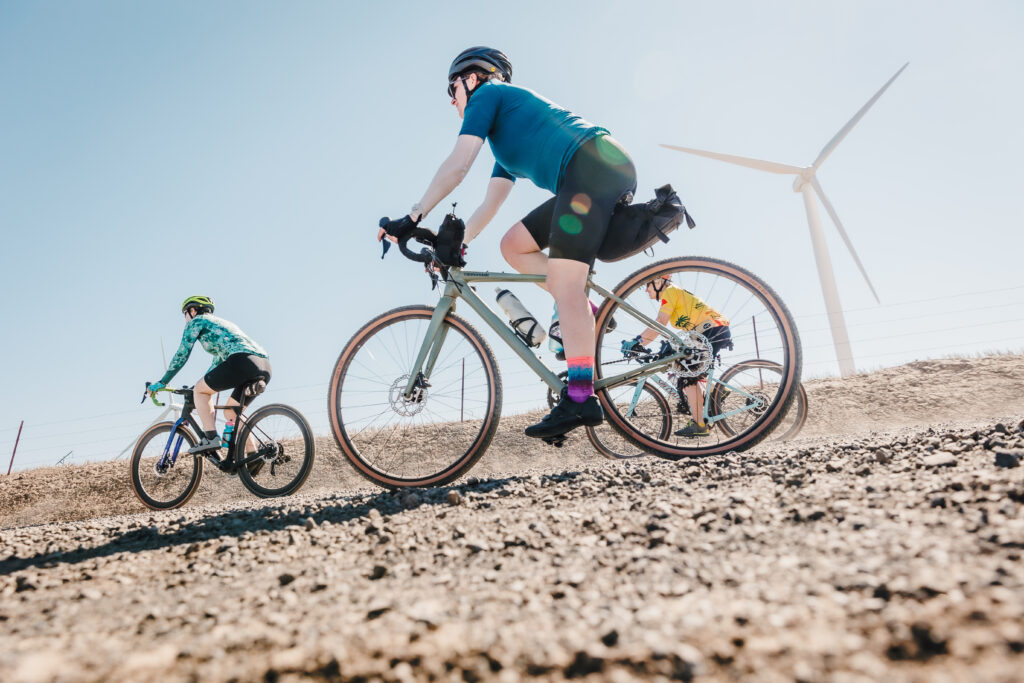
Spring in Oregon is windy and more often than not the breeze is working against you. When we first put out the call to our community for advice on riding in windy conditions the responses were nearly all humorous or sarcastic. The top two replies were “Turn around” and “Don’t”.
The first isn’t always an option and the second is simply just admitting defeat and missing out the fun of a ride. So what does it take to ride confidently and perhaps even thrive in the wind?
Don’t Avoid It!
Getting comfortable riding in the wind is just like developing any other cycling skill—it takes time, patience, and consistent practice. The next time you step outside and see flags and tree branches whipping in the breeze, don’t head to the basement for the indoor trainer. Instead, gear up and embrace the challenge. Head out into the wind, aiming to ride directly into the headwind at the start of your ride. Plan to go a bit farther on the outbound leg, knowing that the tailwind will help carry you home more quickly and easily. The more you expose yourself to windy conditions, the more confident and capable you’ll become.
You Can’t Overpower Mother Nature
Trying to muscle through a headwind is one of the biggest mistakes you can make on the bike. You won’t win. The harder you push, the quicker you’ll burn out. Riders often blow themselves up chasing a “normal” pace, only to get steamrolled by the wind minutes later.
If you’re riding solo into the wind, forget about pace. Don’t let the noise or pressure trick you into going harder than you should. Settle into an effort you can hold. Stay calm, stay steady.
Wind is like riding cobbles or bumpy gravel: keep your grip light, brace your core, and just keep pedaling. Don’t stop. Don’t ease up. If you back off, getting going again is twice as hard. Lock into your zone and ride it out. You’re going to be here for a while—might as well get comfortable.
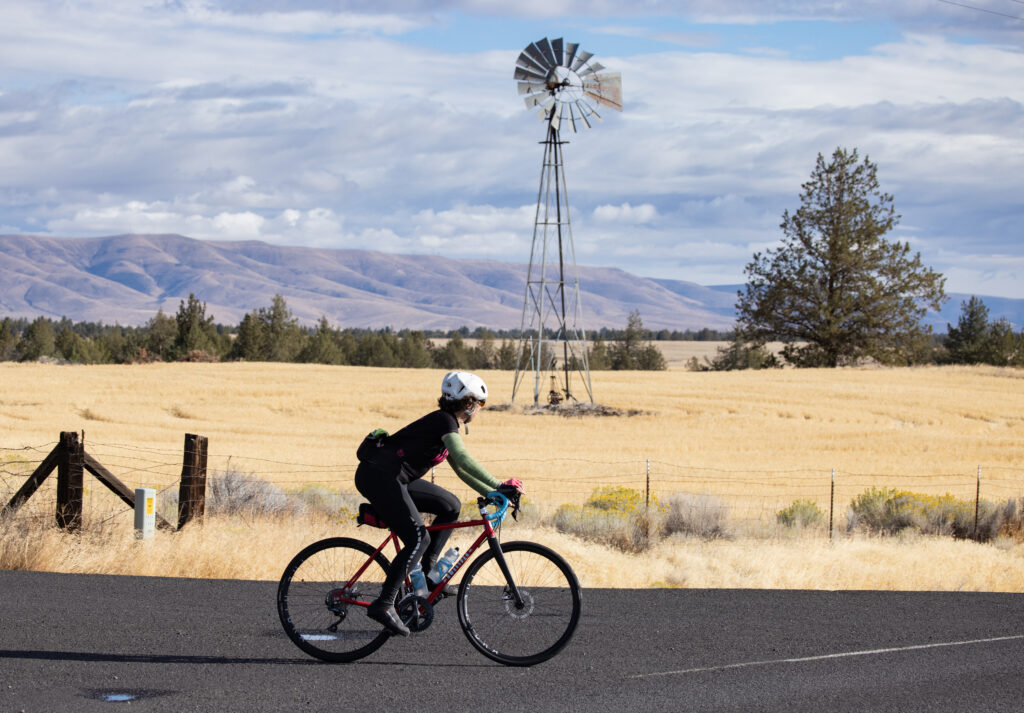
Beware of Wind Gusts
Riding in gusty wind takes more than strength, it takes awareness and control. Start by knowing where the wind is coming from. That might sound simple, but as your route twists and your position in a group shifts, wind direction can get tricky to judge. Watch your surroundings: tall grasses, trees, roadside bushes, and flags can all give you useful cues. Flagpoles, in particular, often stand above wind-blocking obstacles and give a clearer read.
When the wind picks up, especially on descents, get as low as you can or are comfortable with on your handlebars. This lowers your center of gravity and loads the front wheel, giving you better control. Keep your upper body stable and your grip light, but ready.
Always keep pedaling. Steady forward momentum is your best defense against sudden gusts. When you coast, you lose traction and stability and become more vulnerable to getting shoved sideways.
Watch for exposed sections like open fields, bridges, or gaps in trees—those are prime gust zones. And stay away from the very edge of the road. If the wind shifts you unexpectedly, you’ll want space to adjust safely.
Headwind = Thirsty / Tailwind = Hot
Riding into the wind is hard work and higher exertion levels may cause riders to breath through their mouths in order to meet increased oxygen demands from the body. For short efforts mouth breathing may provide the necessary punch to keep the pace but overall it is an inefficient technique that will likely lead to a higher respiratory rate and lower overall performance. Nasal breathing is the preferred process for the body with benefits beyond athletic performance. Breathing through the nose filters and humidifies the air before it reaches the lungs, protecting you from airborne pathogens and allergens that abound in the Oregon Springtime. An open mouth into a headwind will also dry out your mouth and advance the sensation of thirst so be mindful that headwind miles may require more water than usual.
Airflow is your body’s cooling system and wind direction can mess with it fast. When you’re riding into a headwind, the increased airflow ramps up evaporative cooling. That’s why you can start to feel cold, even if you’re working hard. Flip that around with a tailwind, and things change. The wind’s pushing with you, so the airflow over your body drops. Less cooling, more heat buildup.
In hot weather, that means you’ll sweat more during tailwinds—so hydration becomes even more important. Don’t wait until you’re thirsty. Drink regularly, especially on long stretches with the wind at your back.
Cover Your Ears
As silly as it may sound, reducing the sound of the wind may have a positive psychological effect. This is not to say that we recommend riding with headphones, we do not recommend doing so. There are a number of products on the market which passively buffer wind in front of the ears and reduce wind noise. The reduction in wind noise not only has the effect of tricking the mind that the wind is not as powerful but it also protects the ears from hearing loss over time if riding in windy conditions over time.
One of favorite recent finds is the Epic Ride Weather app. It’s $14.99 per year but the information it provides for just one ride is worth lots more than that. The app provides personalized weather forecasts that take into account your speed and location when paired with your favorite route app. Of all the weather data provided for an upcoming ride it’s the wind direction and speed at every section that can really help determine a route or plan for the ride when changes are not possible.
Can you name the products that buffer wind noise, please?
Yes, absolutely! Cat Ears is the best known and most commonly used brand we’ve seen for reducing wind noise while riding. http://www.cat-ears.com