For Kari Lyons, returning to the bicycling world isn’t just a career move—it’s a homecoming. Long before she spent 25 years spearheading climate action and equitable public health initiatives for Multnomah County, Kari was a self-described kid with wonky knees who discovered her own bravery, resilience, and community on a solo cross-country mountain bike trip. Now, as Cycle Oregon’s new Development Director, she is bridging those two worlds perfectly. In our deep-dive interview, Kari shares how bikes function as vital public health tools, why fundraising must always be community-centered, and why a lifetime of falling off mountain bikes is actually the ultimate preparation for meaningful leadership.
A Full Circle Moment
You started your career at the Bike Gallery in the late ’90s and worked the Cycle Oregon Classic early on. How does it feel to return to the cycling world in this leadership capacity after 25 years in public health?
Honestly, returning to the cycling world — and especially to Cycle Oregon — feels like coming home. I started my career at the Bike Gallery in the late ’90s and worked the Classic early on, back when bikes represented freedom, adventure, friendship, and possibility for me. I was a kid with wonky knees and a couple surgeries under my belt who never really saw herself as naturally athletic, but biking slowly changed the way I saw myself and the world around me.
My dad gave me a red Gary Fisher Marlin mountain bike that I named Cherry, and after college Cherry and I hit the road together on a solo cross-country trip, mountain biking all over the U.S. with two weeks in Moab — which felt like the ultimate riding destination to me back in 1997. Some of my favorite memories came from those years: learning how to be brave, falling a lot, laughing constantly, and discovering community in unexpected places.
When I worked at the Bike Gallery, I created a four-week women’s commuter education series because I wanted other women to feel that same confidence and belonging. We talked about rules of the road, what to wear, route planning, basic maintenance, and rode commute routes together until people felt comfortable enough to ride on their own. What I loved most was watching the community form — women riding together to work afterward, cheering each other on, and helping each other feel brave enough to try.
Then life took me into public health, climate work, housing, and equity-centered systems change for the next 25 years. Looking back now, I realize those things were never actually separate from cycling. Bikes touch mental health, climate resilience, confidence, belonging, mobility, joy, and connection — all the things I’ve spent my career caring about.
Fast forward twenty years from that solo road trip and now I get to flail behind my teenager on trails at Stub Stewart State Park with full hearts and big smiles. Coming back to Cycle Oregon now feels incredibly meaningful because the cycling world has also evolved in beautiful ways. That’s also why Joyride means so much to me. I’ll never forget arriving at my first Joyride in 2016 as a brand-new mom, walking from my car to registration, looking around, and feeling this overwhelming sense of belonging and safety. It felt like this gorgeous invitation to just show up exactly as yourself — bravely, imperfectly, unapologetically. Returning to this work now feels deeply personal because I know firsthand how transformative those spaces can be.
Health and Wheels
Your work in public health focused on climate action and equitable access to housing and food. How do you see the “Mission-First” programs—like Jump Start and Kids Camp—intersecting with those larger community health goals?
I see bikes as public health tools. Programs like Jump Start and Summer Kids Camp aren’t just about riding — they’re about confidence, belonging, mental health and helping kids feel connected to their communities. Because of my own experience, I understand that bikes can completely change how someone sees themselves. Sometimes a bike becomes transportation, freedom, friendship, stress relief, or a way to feel capable again. That’s why this work matters so much to me.
The Evolution of Advocacy
Having authored climate action plans and advocated for active transportation, what do you see as the biggest opportunity for our organization to influence the region’s future?
For more than a decade, my work in public health focused on bringing health outcomes into climate planning and transportation policy. At the time, public health was still not fully integrated into climate conversations, despite being deeply connected to the climate justice movement. As we began linking health outcomes — including rising respiratory illnesses tied to diesel particulate matter and poor air quality — to transportation and land-use policy, we started to see how equitable transportation systems could help reduce health disparities.
Today, as Oregon continues to grow, we are experiencing more congestion, more single-occupancy vehicles, and increasing transportation-related emissions that disproportionately impact lower-income communities and communities of color. One of the greatest opportunities for our organization is to continue advancing active transportation as a public health strategy that expands access, strengthens communities, and helps more people safely and affordably move through their neighborhoods. Getting more “butts on bikes” is not just about recreation — it is about improving air quality, increasing access to affordable mobility, reducing chronic disease, strengthening mental health, and creating healthier, more connected communities for everyone.
Equity in Giving
You have a strong commitment to equity. How do you plan to weave those values into our fundraising strategies and grant applications?
For me, equity means ensuring the people closest to the challenges help shape the solutions. When living in Southern Africa, I learned a phrase from the Disability Rights Movement that has stayed with me: “Nothing about us, without us.” In fundraising, that shows up in who we partner with, who we listen to, how we tell stories, and how we invest resources. I want giving to feel relational, community-centered, and grounded in real experiences, trusted relationships, and authentic voices.
I believe fundraising should build connection rather than reinforce power differences. That means telling stories with communities rather than about them, valuing lived experience alongside financial resources, and being transparent about how decisions are made and where resources go. When trust, belonging, and shared purpose are at the center of philanthropy, fundraising becomes more than raising money—it becomes a way of building stronger communities and creating lasting change together.
The Art of the Ask
You’ve secured large grants and managed major events in the past. What is your philosophy on building relationships with donors who want to see their contributions make a tangible impact on Oregon communities?
What I’ve witnessed in the past four months is that people support Cycle Oregon because of how this community makes them feel — connected, inspired, supported, and part of something bigger than themselves. There’s a Maya Angelou quote I think about often: “People will forget what you said, people will forget what you did, but people will never forget how you made them feel.” That really speaks to Cycle Oregon.
People care deeply about what bicycles can create — freedom, confidence, adventure, opportunity, and belonging — and they want more people across Oregon to experience that feeling too. What stands out most to me is the heart of this organization. Our riders, volunteers, donors, and staff genuinely care about each other and the communities we serve. People are not just giving to an event or program — they are investing in a community and a cause they believe in.
Donor engagement involves fostering a sense of connection to the outcomes achieved through their contributions. At Cycle Oregon, this is demonstrated by illustrating how donor support yields tangible results: increased participation among youth learning to cycle, expanded access to bicycles in underserved communities, and enhanced experiences of confidence, connection, and belonging through cycling initiatives.
Maintaining donor engagement requires ensuring individuals feel informed, valued, and included in the organization’s progress. When donors are able to observe the direct impact of their contributions and recognize their role within the wider community supporting these efforts, relationships become enduring and significant.
Beyond the Event
While we are known for our rides, your role focuses on the long-term sustainability of the organization. What are your primary goals for diversifying our funding over the next few years?
The rides are incredible and will always be at the heart of Cycle Oregon, but there is also a real opportunity to strengthen long-term sustainability around our mission-first work and statewide impact. Over the next few years, I’d love to continue growing and refreshing our Community of Giving — building deeper, more relational connections with the people who already love this organization and believe in what bicycles can create. We have an incredibly loyal and generous community, and there is an opportunity to turn that passion into a stronger, more sustainable base of support. Alongside grants, corporate partnerships, planned giving, and community campaigns, the goal is to build a funding model that helps expand youth programs, strengthen local partnerships, and create more connection, belonging, and opportunity through cycling across Oregon for the long haul.
A “Joy-First” Approach
Your Staff page bio mentions a passion for “spreading joy” and “belly laughs.” How does that positive energy translate into a professional development environment?
I think joy matters deeply in this work. Nonprofit work can be heavy, and people do their best work when they feel connected, energized, appreciated, and inspired. I try to bring warmth, humor, and humanity into professional spaces because relationship-building is at the center of everything we do.
Lessons from the Trail
You joked about falling every time you mountain bike. How has that sense of resilience or “getting back up” served you in your professional life?
I joke that I’ve probably spent as much time falling off mountain bikes as riding them, but honestly some of my favorite memories have come from those moments. I’ll never forget riding at Three Corner Rock with the old Bike Gallery crew. I was the least skilled rider in the group and wiped out on a tight turn straight into a giant slope of ferns. My friend Nick rode past, saw my bike but not me, stopped, and started yelling my name in panic. I finally popped my head up perfectly framed by fern leaves and we all completely lost it laughing.
That sense of resilience has shaped almost every part of my professional life. Life is not perfect, and meaningful work rarely happens in a straight line. We make huge investments in learning — through setbacks, hard conversations, failed strategies, and moments where we have to pause, reassess, and try again.
Cycling taught me not to fear those moments. Sometimes you crash, study the trail from a different angle, and get back up with more perspective than you had before. That mindset has helped me navigate complex community work, systems change, and nonprofit leadership with patience, adaptability, and persistence.
It has also taught me the importance of community. You do not get through hard things alone. The strongest outcomes come from trust, collaboration, and people encouraging each other along the way. That has made me a more grounded leader and someone who values long-term relationships, humility, and continuous learning over perfection.
The Red Linus vs. The Mountain Bike
If you could only have one for a weekend—a slow cruise through the city on your red Linus or a muddy day on the trails with your son—which are you picking?
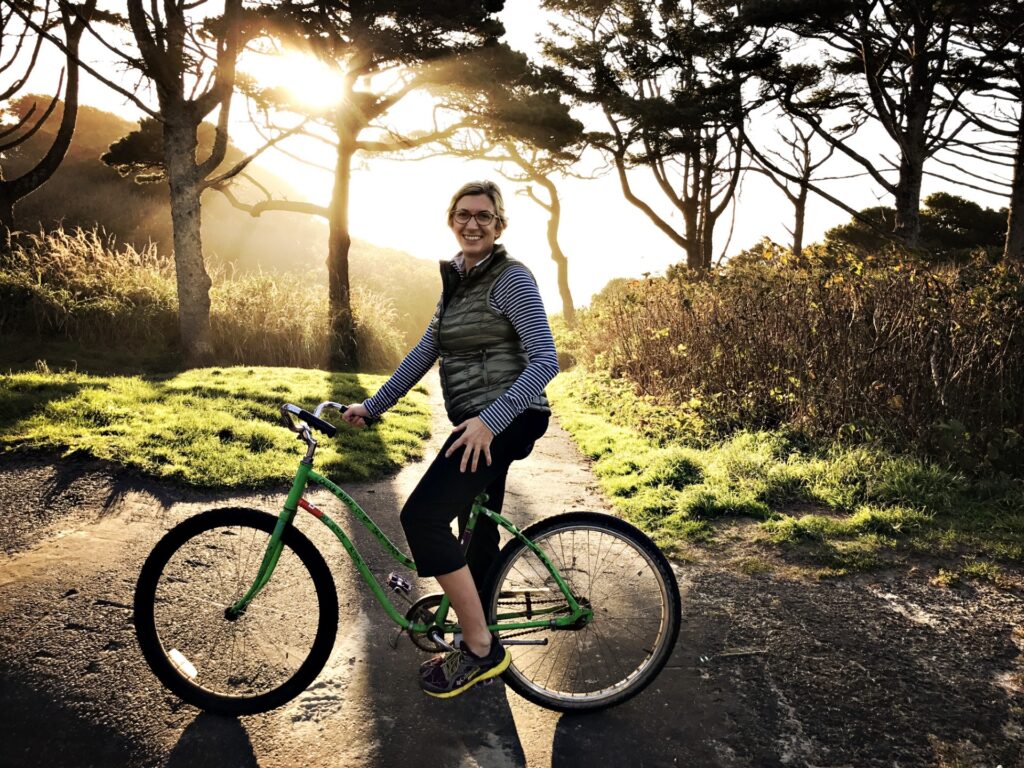
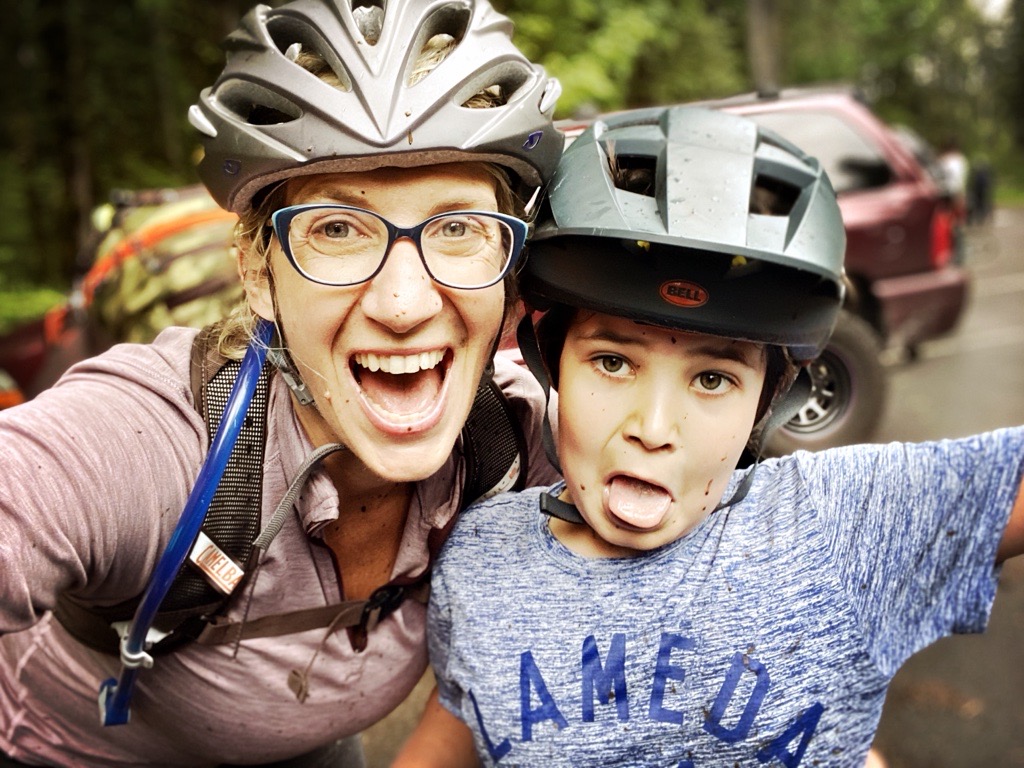
Honestly, don’t make me pick! I love the slow simplicity of cruising around Portland on my red Linus, stopping into neighborhood spots and soaking in the community around me. But I also love the muddy, adventurous days on the trails with my son — the laughter, the wipeouts, and the feeling of being outside together figuring things out as we go.
They’re different experiences, but both represent what I love most about biking: connection, freedom, joy, and community.
Surfing and Open Water
What is your favorite spot to hit the water when you aren’t on two wheels?
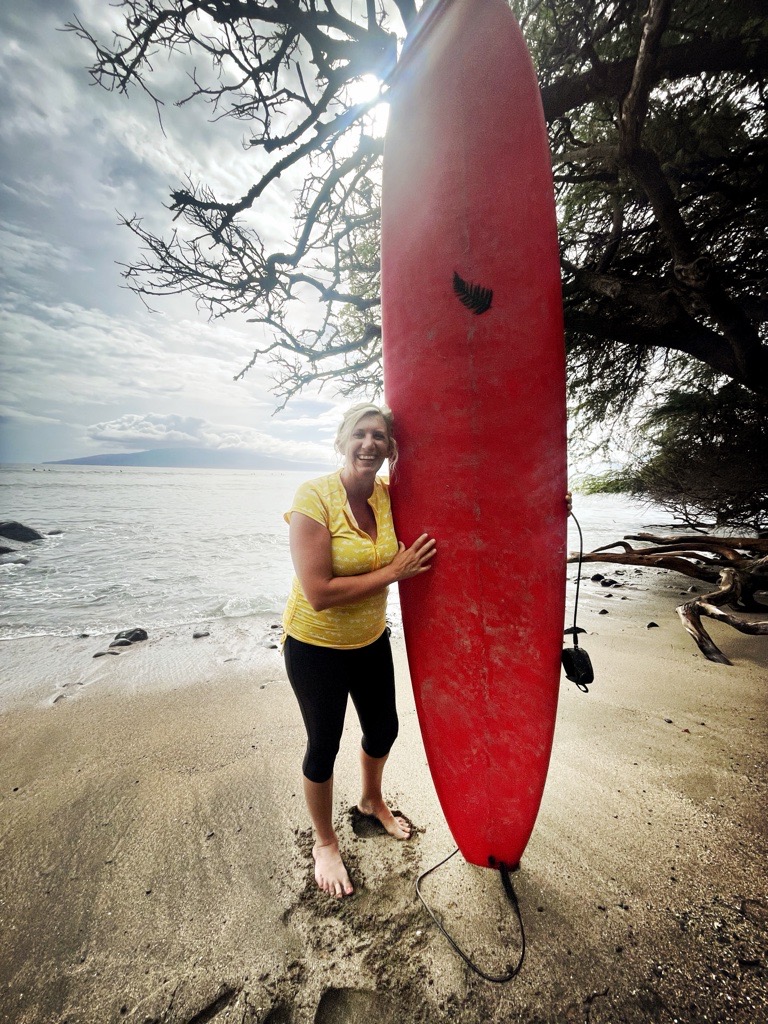
You really can’t beat a sunset surf at Otter Rock in the summer and early fall. There are these magical evenings where the sun sits low on the water and the conditions are what surfers call “corduroy” — perfectly spaced sets, no wind chop, just smooth glassy water rolling in.
Whether I catch a wave or not almost doesn’t matter. Sitting out there alone on my board, waiting for the right moment to turn around and pop up, feels like meditation to me. The ocean has this way of making everything else quiet for a while. It’s one of the places where I feel most grounded, present, and connected to something bigger than myself.